
Nika Kovač: abortion is still treated as a politically sensitive issue
Slovenian-born Nika Kovač is one of the leading figures in the European Citizens’ Initiative “My Voice, My Choice”. The movement aims to ensure access to safe abortion for all people living in the European Union through EU funding.
Kovač has previously been active in promoting gender equality, social justice, and political participation at the local level. The conversation takes place at a moment when the initiative has received the necessary supporting votes from the European Parliament. Now the ball is in the court of the European Commission.
What are the challenges you could be facing in the European Commission?
The biggest challenge now is not whether the problem is recognised, but whether the European Commission will act with the urgency this situation demands.
More than 20 million women in Europe still live in countries where access to safe and legal abortion is restricted or practically unavailable. For them, delays are not abstract. They mean postponed care, forced travel, financial strain, and real health risks.
The European Parliament and citizens have done their part. More than 1.1 million people signed the initiative, and thousands have volunteered. We built a network of over 300 organisations, stood in more than 95 cities, and showed clearly that this issue matters far beyond activist circles. At this point, the responsibility is no longer on citizens to prove that the problem exists; it is on the Commission to respond.
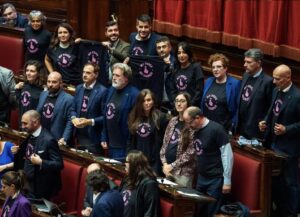
Photo: My voice, my choice, screenshot of the website
One of the challenges we face is that abortion is still treated as politically sensitive issue – even though the evidence is clear that restricting access does not reduce the number of abortions. It only makes them unsafe. During the December hearing in the European Parliament, Commissioner for Equality Hadja Lahbib stated that limiting access leads to unsafe practices and added that this is a public health issue that needs to be addressed. That moment mattered, because it acknowledged the reality women face across Europe.
The question now is whether this understanding will be translated into concrete measures. The Commission has broad discretion in how it responds to a European Citizens’ Initiative. It can act decisively, or it can delay – narrow the scope or hide behind formal arguments about competences. That is why maintaining pressure and momentum is essential. By March 2nd, the Commission must formally respond.
What could be the bigger implications of creating an EU-funded, voluntary ‘opt-in’ mechanism for abortion?
Right now, in many parts of Europe, the “right” exists on paper, but in real life it often means travel, time off work, childcare, secrecy, stress, and costs people simply cannot afford. A mechanism like this would say: if a Member State is willing and able to provide care under its own laws, the EU can help fund that support. This would ensure that the burden doesn’t fall on the person who needs healthcare.
The bigger implication is what the EU tells women: that the Union is not only a space where capital and goods move freely, but also a community that takes health and equality seriously. It marks a shift from moralising and avoidance to practical solidarity.
This initiative is the first European Citizens’ Initiative to receive such clear support from the European Parliament. That support shows that unequal access to abortion care is no longer treated as a marginal issue, but as a structural problem the EU has a responsibility to address.
Finally, this mechanism shows the difference between interfering and helping. National laws are not rewritten, and no country is forced to opt in. But women’s lives are no longer treated as a private problem.

Photo: private collection
How could donations help you move forward with the movement “My voice, my choice”?
Donations allow us to stay independent and focused at a moment when the pressure must not fade on the European Commission. They help us keep a small team working full time and cover the very real costs related to this work. For example, travel and accommodation costs in Brussels, translation work to make information accessible across Europe, responding to misinformation and keeping the initiative visible in public debate.
This campaign has always been built on people, not on large institutional backing. Staying independent also means staying accountable to the more than one million people who signed and not going along with political interests. Keeping this work going costs money, and every donation helps us stay afloat and keep pushing. All so the voices behind the movement wouldn’t disappear once the headlines move on and the hard work of turning political support into real change begins.
The movement “My Voice, My Choice” can be supported through donations. More information can be found on their website and on Instagram, Facebook, X, and TikTok.